Fender Rhodes Tuneup
Our Fender Rhodes tuneup is a ten-step process designed to restore Rhodes pianos to their original factory specifications and dimensional standards. It is recommended that this process be performed every two years. Pricing information can be found here.
1. Detailed Cleaning
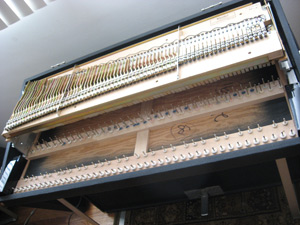
The piano is first disassembled, removed from its case, and thoroughly cleaned. Any dust, metal debris, or foreign objects that could slow down the action or create unwanted noises are removed.
2. Humidity, Rust, and Corrosion Treatment
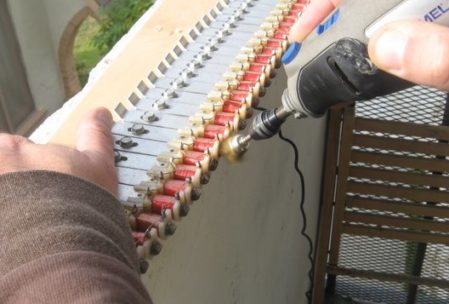
Surface rust, corrosion, or oxidation is removed and treated to prevent further spread.
3. Cosmetic Repairs
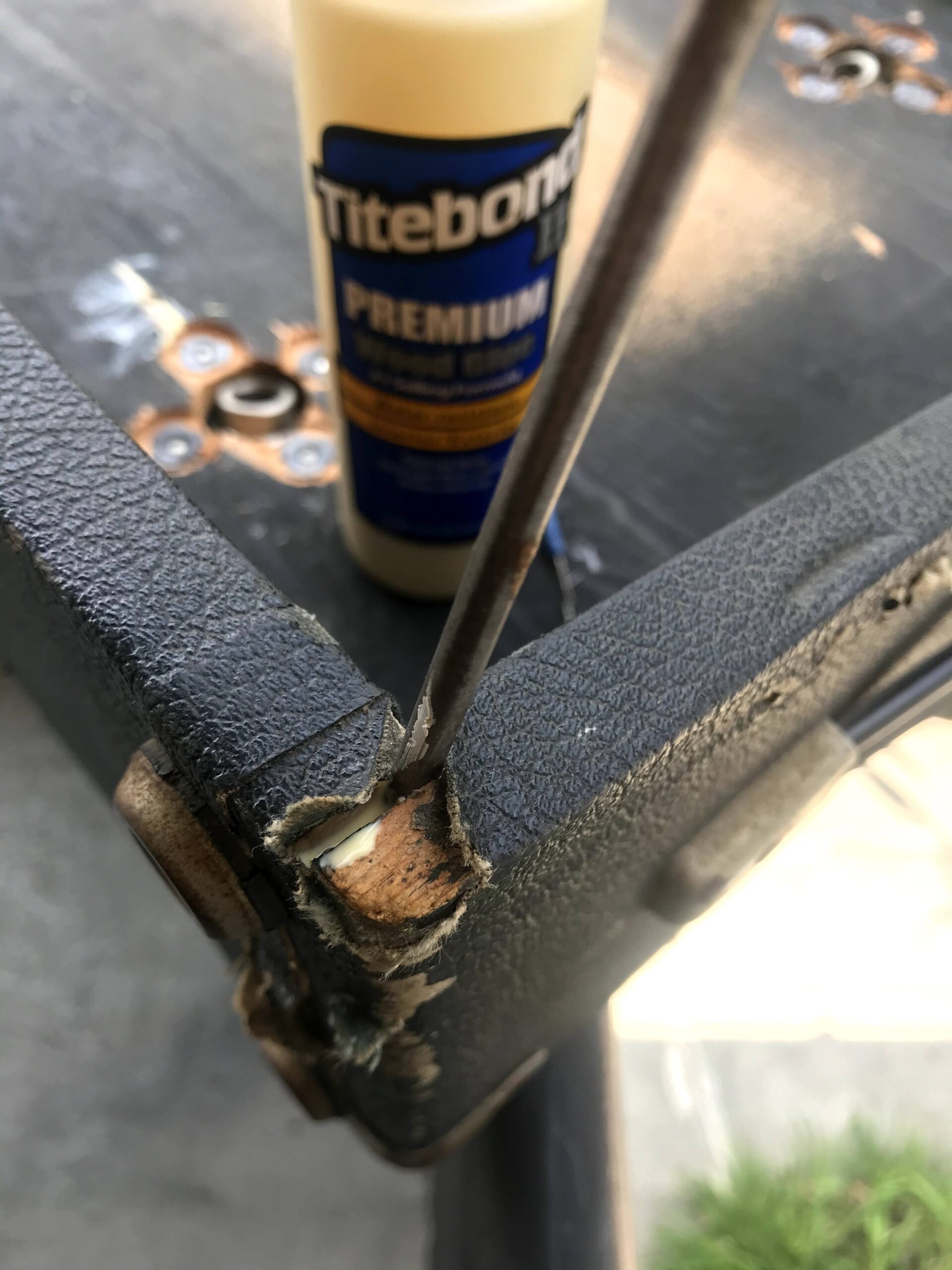
Minor external damage is repaired to prevent further damage to the piano’s exterior. We also offer complete exterior restoration and custom modifications.
4. Dampers Treatment
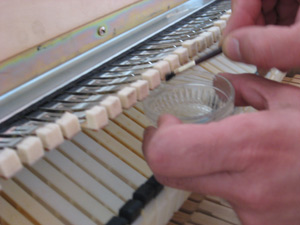
Damper arms are adjusted and floppy damper felts are rejuvenated using our signature formula. Worn-out or torn felt may need to be replaced.
5. Action Felt Treatment
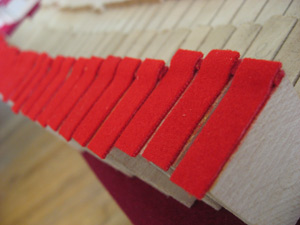
The action felt is cleaned and treated to maintain responsive and accurate action. Worn-out felt may need to be replaced.
6. Tonebar Grommet Inspection
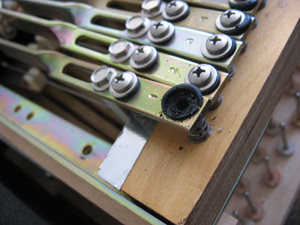
Flexible rubber grommets are crucial for achieving stable voicing, sustain, and consistent volume. Worn-out grommets may need to be replaced.
7. Hammer Tip Inspection
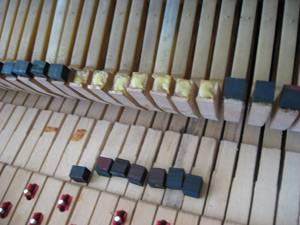
Loose hammer tips often need to be re-glued to the hammer. Grooved hammer tips may require replacement.
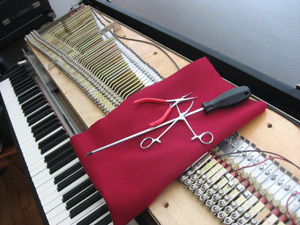
8. Adjustments
9. Re-tuning
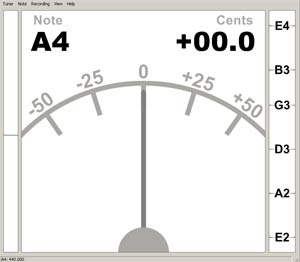
To ensure that Rhodes pianos stay in tune, we play the piano and re-check it for any changes in pitch.
10. Training
We believe that every Rhodes owner should know the basics of caring for and maintaining their instrument. When you pick up your piano, we will provide maintenance, voicing, and tuning tips tailored specifically for your Rhodes model and its condition.